
7 Pro Tips to Master AI Photo Editing
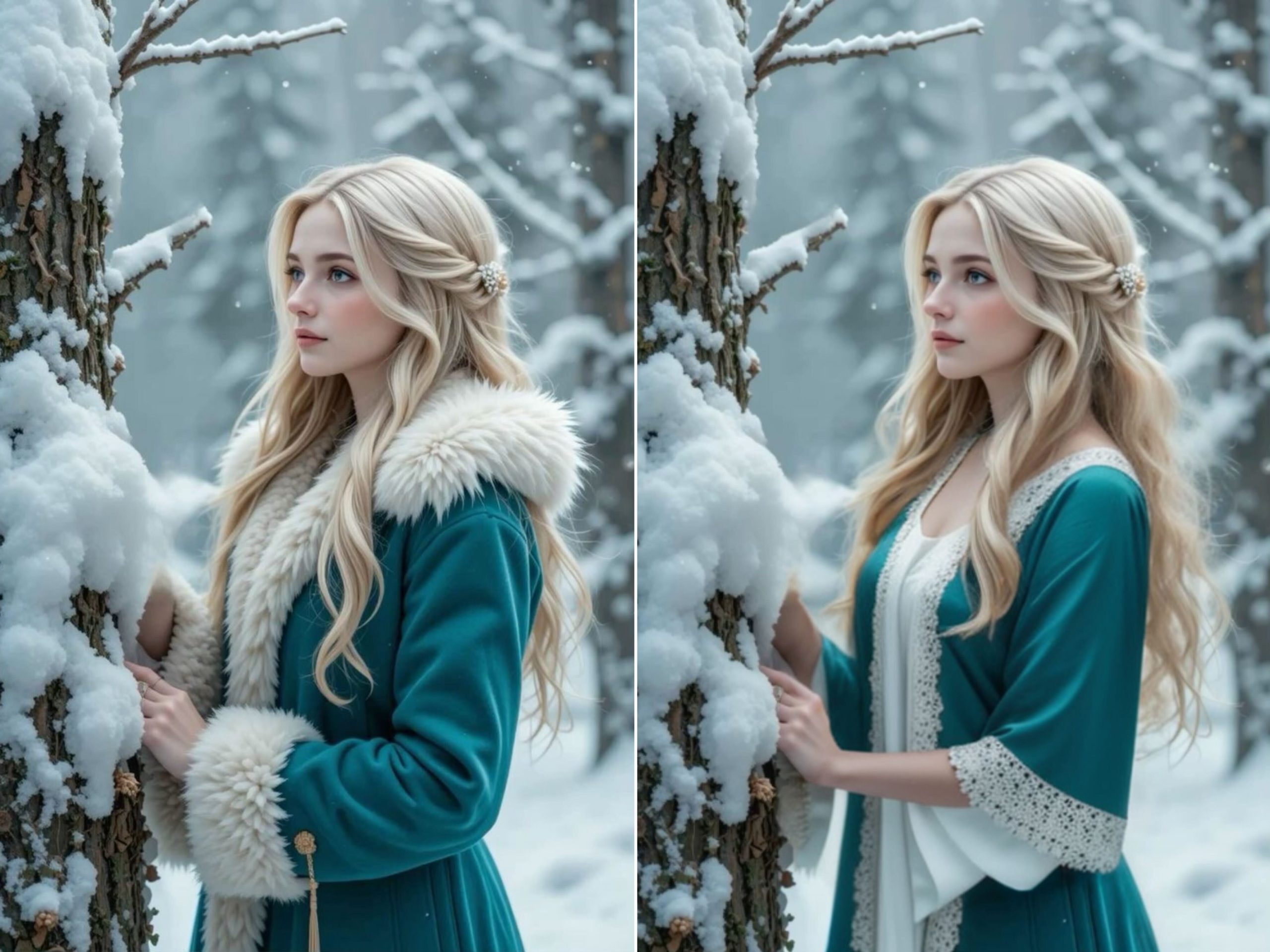
AI has revolutionized photo editing, turning complex retouching into a few clicks.
Tools like Photoshop Generative Fill, Midjourney, and Sih.AI use deep learning to transform images—but mastering them requires strategy.
As an AI industry veteran, here’s my insider guide to unlocking their full potential.
1. Embrace Trial & Error as Your Secret Weapon
AI rarely nails it on the first try. Even pro artists iterate 5–10 times before perfection. Here’s how to iterate smartly:
- Prompt Roulette: Change 1–2 words in your prompt (e.g., “sleek cyberpunk armor” vs. “matte cyberpunk armor”)
- Brush Size Experiments: Use a larger brush for broader edits, smaller for details
- Fill Mode Swaps: Toggle between “Original,” “Pattern,” or “Color” to see texture differences
Pro tip: Save each iteration. Sometimes a “failed” edit has elements you can blend into the final version.
AI clothing edits: Expect different outcomes even with similar prompt inputs.
2. Make Peace with AI’s Quirks (They’re Part of the Process)
AI has blind spots—expect the occasional wonky hand, mismatched texture, or surreal distortion. Instead of fighting it:
- Use Flaws as Creative Springboards: A misgenerated detail might inspire a new artistic direction
- Mask & Overwrite: Use the brush tool to selectively re-edit problematic areas
- Lower Expectations Early: Treat AI as a collaborator, not a perfectionist robot
Example: If AI adds an extra finger, turn it into a sci-fi cybernetic appendage with a new prompt.
Using Generative Fill to quickly mask AI flaws is often easier than fixing them.
3. Know When to Fold (and When to Fight)
AI struggles with:
- Highly Specific Cultural References: “Traditional Japanese kimono patterns” may confuse it
- Extreme Close-Ups: Faces within 6 inches of the lens often warp
- Chaotic Backgrounds: Cluttered scenes with 10+ objects
- Text Recognition: It rarely gets words right on the first try
Workaround: Simplify the edit area. Use a rectangle mask to isolate the subject from busy backgrounds.
Sometimes, even with effort, AI struggles to understand your intent.
4. The Square Mask Trick (Game-Changer Alert)
AI blends square masks 3x better than round ones. Here’s why:
- Geometric Consistency: Squares align with AI’s grid-based processing
- Edge Clarity: Rounded edges confuse the AI’s depth perception
- Content Balance: Squares give the AI more “playroom” to generate content
Try using squarish masks—they give AI more leeway to blend content naturally.
Application: When changing clothes, use a square mask covering the torso. Add a 20% feather for soft transitions.
5. Patience = Perfection (No, Really)
Complex edits need layers of AI magic:
- First Pass: Roughly define the edit area with a broad prompt
- Second Pass: Narrow the prompt (e.g., “add lace trim to the dress”)
- Third Pass: Fix details with “enhance stitching texture”
Case study: Editing a wedding photo took 7 passes: 3 for dress lace, 2 for bouquet enhancement, 2 for skin smoothing.
6. Context Is King (Literally)
AI thrives on clarity. Optimize your images by:
- Front-Facing Poses: Profile shots confuse limb placement
- Solid Backgrounds: Green screens or plain walls work best
- Well-Lit Scenes: Underexposed areas make AI “guess” details
Prompt hack: Add context to your text prompt: “sunlit beach scene with blue ocean in background”
AI works best with direct studio shots, since the subject is easily distinguishable.
7. Decode AI’s Hidden Biases (Yes, They Exist)
AI models have blind spots due to training data:
- Skin Tone Bias: Some models over-saturate darker skin tones
- Body Shape Bias: Curvy figures may get “smoothed” unnaturally
- Fashion Bias: Non-Western clothing styles often get distorted
*Mitigation steps:
For cultural clothing, include “authentic [culture] design” in the prompt*
Use diverse reference images in prompts
Add “realistic skin texture” to counter over-saturation
FAQs: Demystifying AI Photo Editing
What’s the difference between AI editors and generators?
Editors modify existing photos (e.g., Sih.AI enhancing a portrait)
Generators create from scratch (e.g., DALL-E making a fantasy landscape)
Can AI replace professional retouchers?
No—but it can speed up 80% of the workflow. Pros still handle:
Ethical retouching decisions
Fine art composition
Emotional tone adjustment
How to avoid creepy AI faces?
Reference real human portraits in your prompt
Use “natural facial features” in your prompt
Edit faces in 2 passes: 1 for structure, 2 for expressions
Final Rule: Play More, Perfect Less
AI photo editing is part science, part art. The most groundbreaking edits often come from happy accidents. So upload that flawed photo, scribble a wild prompt, and let the AI surprise you—you might just create something truly unique.
P.S. Before you edit, save the original! You’ll thank me later.