
7 Professional Guideline for AI Photo Editing
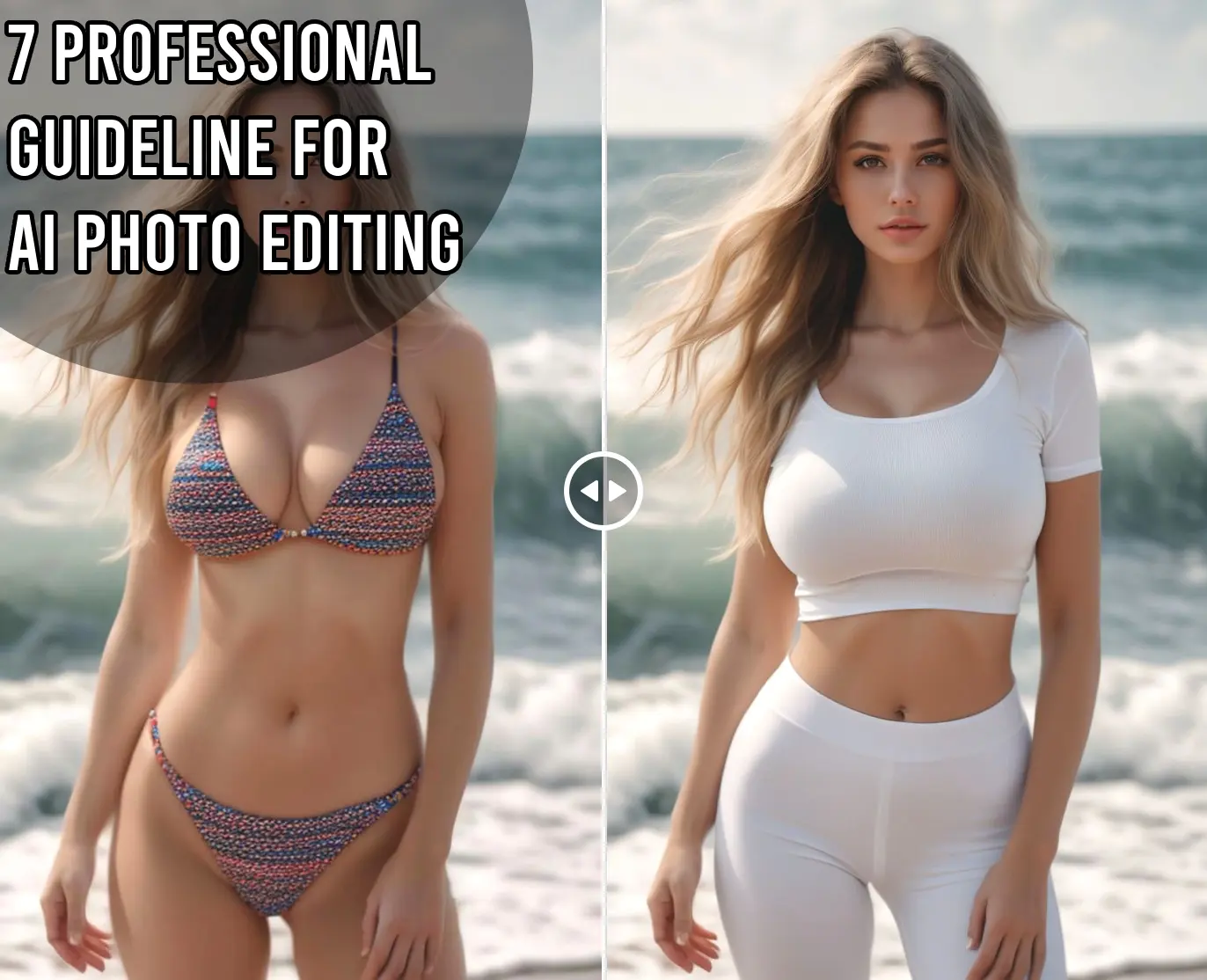
Thanks to artificial intelligence, photo editing and image alteration have acquired entire fresh aspects.
The days of hours of hand retouching and battling difficult software are long gone.
Algorithms and deep learning drive AI photo editors like Photoshop Generative Fill, Stable Diffusion and Sih.ai to literally change your photographs with only a few clicks.
Like every tool, though, learning AI picture editors comes with certain difficulties and subtleties.
Having started an artificial intelligence company myself, I will offer some priceless advice to maximize your AI photo editing toolkit.
Most or all photo editors on the planet follow these guidelines, which let text prompt inputs to enable image alteration.
1. It’s a Trial and Error Process
First of all, let me clear one point: artificial intelligence hardly gets it right on the first try.
Expect to enter the world of trial and error whether you’re using a basic filter generator or a sophisticated AI-based generative fill tool.
It’s all about playing with different prompts, fill kinds, and brush areas.
Though the first outcome might not be precisely what you expected, keep on.
Change the settings and try again or just fix smaller portions of the picture with Generative Fill.
Every AI artist does just that.
2.Adopt the imperfections of artificial intelligence.
Artificial intelligence is far from perfect even if has amazing powers.
It struggles occasionally to grasp your picture or the prompt you offer.
This can result in completely ridiculous AI-generated material devoid of any similarity to your ideas.
Be not demoralized; the path to artificial intelligence includes this.
Sometimes the most odd outcomes can inspire your imagination in unusual directions.
3.Know Its Restraints
Though it is amazing, artificial intelligence cannot understand the idea of every picture.
Some pictures just go against our knowledge.
If artificial intelligence struggles with a specific image, don’t become discouraged; it’s not a reflection of your editing ability.
Rather, keep in mind that human intuition and ingenuity still rule supreme in some fields.
4.Squaremas Over Round Ones
Think about making masks squarish rather than circular when editing particular sections of your image.
One can make a big difference with this apparently little change.
Try rectangular masks. This will allow artificial intelligence additional space to mix in the material.
AI usually finds it simpler to combine square masks, so guaranteeing a more seamless transition between modified and unprocessed parts of your image.
That is particularly true while using AI to change clothing.
5.Be patient since several retouches can be required
Many times, perfection calls for patience. From the start, AI-generated modifications are not always exactly accurate.
You might have to use the AI’s magic several times depending on the image’s complexity and intended result.
Sih.ai fill modes clarified
Experimenting with same brush size and prompt but varying Fill Modes.
Alternatively, you can be particularly alert to anything looking strange in the scenario if you want to contribute your face to artificial intelligence picture.
If it takes more than five to ten efforts to reach your desired outcome, avoid becoming annoyed. Every iteration will help you get near to excellence.
6.Context Is Important
To really work, artificial intelligence need background. For instance, the AI has to know the background of the image if you are substituting clothes for a human.
Sometimes one finds it difficult to achieve the precise body posture, which leads to erroneous changes.
Choose photographs with simple backgrounds to help to offset this, particularly in front-facing portraits of individuals.
7.AI has biases
Although artificial intelligence photo editors have amazing powers, it’s important to acknowledge a major problem that usually hides under the surface: bias.
Including those employed in photo editing, artificial intelligence systems can unintentionally reinforce prejudices in the material they were taught on.
This important for the following reasons and on your part what can you do?
1.Data Bias in AI
AI models only as good as the data they have been trained on. Should the training data include prejudices, those prejudices could find their way into the artificial intelligence’s decision-making process.
A model trained on a dataset mostly comprising specific kinds of images or subjects, for example, could find it difficult to produce correct results for less-represented categories.
2.The Impact on Image Editing
In the context of image editing, these biases can manifest in various ways. Skin tone biases are a well-documented example.
AI photo editors may inadvertently favor certain skin tones, leading to unnatural or undesirable results when editing photos of individuals with underrepresented skin tones.
Conclusion
Powerful tools that will improve your image editing game to unprecedented levels are artificial intelligence photo editors. Still, it’s important to know their peculiarities and constraints.
Embracing trial and error, being patient, and offering clear context can help you to maximize the actual capability of AI picture editors.
Thus, let your imagination run wild and let artificial intelligence to be your travel buddy on the fascinating trip of visual storytelling.
FQA
How and by what means do artificial intelligence photo editors operate?
AI picture editors are computer programs using artificial intelligence (AI) and machine learning techniques to automatically improve and alter digital photos. They operate by dissecting the content and context of an image, then making several changes depending on set guidelines or user feedback.
Can artificial intelligence photo editors replace conventional photo editing programs?
For pros who need exact control over every element of their edits, AI photo editors are not able to replace conventional software even if they are rather strong and can automate numerous chores. Still, they are great tools for quick fixes, creative changes, and time-saving editing along the road.
Why, in photo editing, could bias in artificial intelligence be a worry?
In particular with regard to skin tones or underrepresented subjects, bias in artificial intelligence might provide unfair or erroneous outcomes. Knowing this problem is crucial, and employing AI picture editors calls for actions to minimize prejudice.
Regarding artificial intelligence photo editing, are any ethical issues?
Indeed, ethical questions include those of privacy (particularly in relation to picture manipulation of people without permission), the possibility of false or misleading images, and the continuation of damaging beauty ideals. Using AI photo editing ethically and sensibly is absolutely vital.
Are business uses for artificial intelligence photo editors possible?
Indeed, Generative Fill by Photoshop and Sih.ai are among the many artificial intelligence photo editors fit for commercial use. Reviewing the terms and conditions of the particular product or service is crucial, though, to guarantee adherence to licencing and use limits.
Apart from photo editors, what distinguishes artificial intelligence photo generators?
While AI photo editors improve or change already-existing images, artificial intelligence photo generators generate fresh images from scratch. Generators create; editors are for perfecting and image manipulation.